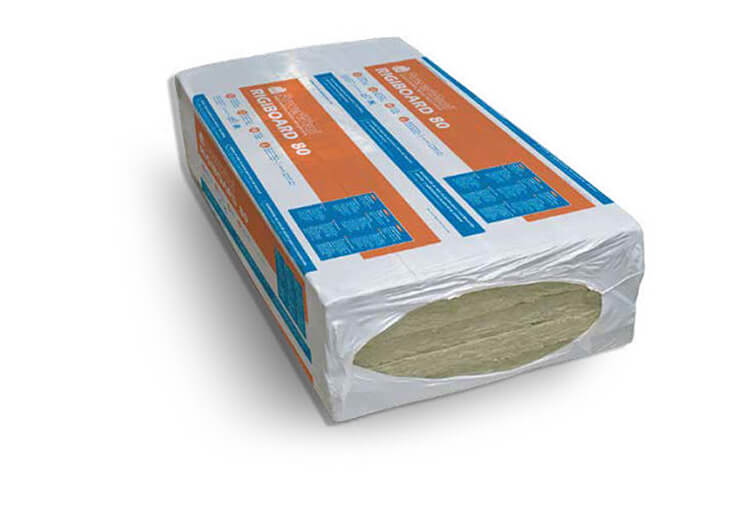
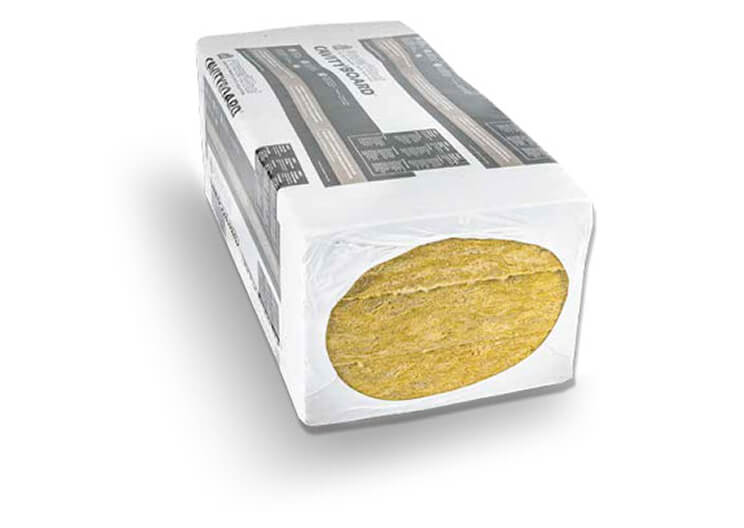
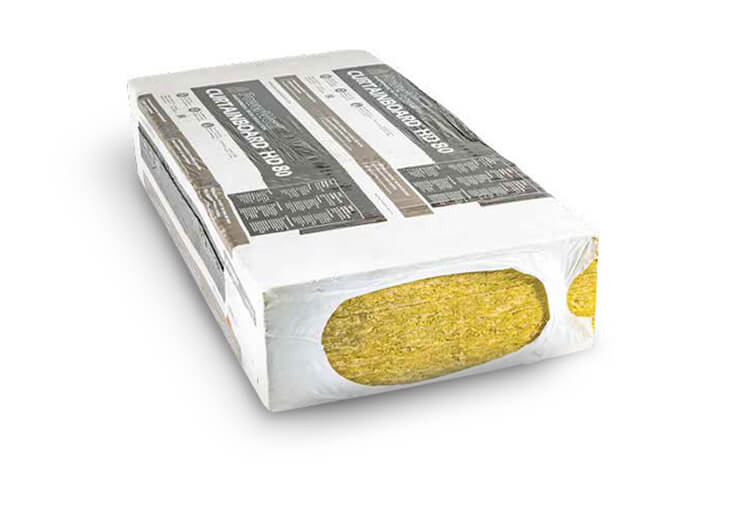
Mineral wool fire resistance makes this insulation a central component in fire-safe building enclosure design. The exceptional mineral wool fire resistance properties allow the material to maintain structural integrity under extreme heat. This makes it a dependable choice for perimeter fire containment systems, spandrel assemblies, and other critical locations. As façade systems become more complex and energy codes continue to evolve, the need for materials that can perform predictably during a fire event has never been more important. In addition to fire containment, mineral wool delivers reliable mineral wool thermal performance that supports energy code compliance in the same assemblies.
Manufacturers produce mineral wool from molten rock and recycled steel slag. They spin these materials into fibers and compress them into boards or batts. This composition gives it an inherent resistance to high temperatures. The fibers do not produce smoke or support combustion. They retain their form even at temperatures up to 2150 degrees F—conditions that would compromise many other insulation materials. This stability explains why designers widely specify mineral wool in assemblies that must remain intact to prevent fire spread. Projects tested to NFPA 285 requirements especially benefit from this material.
Figure 1: Typical slab edge interface using mineral wool fire containment insulation
Mineral Wool Fire Resistance Behavior Under Heat Exposure
When exposed to fire, mineral wool maintains its density and does not shrink away from adjacent components. This characteristic proves critical at slab edges where even small voids can create pathways for flame or hot gases. Installers working in these conditions often note a key benefit. Mineral wool’s rigidity helps maintain consistent compression against anchors, mullions, and firestop sealants. This reduces the likelihood of gaps forming during installation or during building movement.
In curtain wall systems, mineral wool frequently place behind spandrel glass or opaque panels. The insulation provides a thermal barrier during normal operation, but during a fire it also acts as a protective layer that slows heat transfer to the interior. The material’s ability to remain dimensionally stable under heat allows it to work in concert with firestop sealants and safing materials. The same fiber density that provides fire resistance also contributes to the material’s acoustic insulation properties, making it a multi-functional component in building enclosures.
This mineral wool fire resistance capability is critical at slab edges where even small voids can create pathways for flame or hot gases.
Installer Considerations for Mineral Wool Fire Resistance at Slab Edges
Slab edges present some of the most challenging conditions for installers. Irregular concrete surfaces, anchor penetrations, and varying mullion geometries require insulation that can cut precisely and friction fit without losing its form. Installers often rely on serrated knives to achieve clean cuts that maintain the board’s edge integrity. Mineral wool’s density allows it allows installers to trim without excessive tearing, which helps maintain tight tolerances around anchors and brackets.
During installation, maintaining continuous contact between the mineral wool and the firestop sealant is essential. Installers typically apply pressure along the board’s perimeter to ensure full adhesion. Mineral wool’s rigidity helps distribute this pressure evenly, which reduces the risk of localized compression that could create voids. Achieving fire-rated performance requires proper mineral wool installation techniques including precise cutting and consistent compression against firestop components.
Figure 3: Recommended cutting technique for maintaining edge integrity
Trade Coordination for Mineral Wool Fire Resistance Systems
Fire containment at slab edges requires coordination between multiple trades. Curtain wall installers, firestop contractors, and air barrier installers must work in sequence to ensure continuity. Mineral wool’s predictable behavior helps streamline this coordination. Because the material does not slump or deform, firestop contractors can apply sealants with confidence that the insulation will remain in place. Similarly, curtain wall installers can set mullions knowing that the insulation will maintain consistent pressure against the frame. Teams must also consider moisture management in wall assemblies where multiple control layers intersect with fire containment systems.
The predictable mineral wool fire resistance behavior helps streamline coordination between trades.
Conclusion
Mineral wool fire resistance properties make it a foundational material in modern building enclosure design. The reliable mineral wool fire resistance performance under high temperatures, combined with dimensional stability and integration with firestop systems, provides essential life safety protection.