Fire Rated Assemblies

Why Fire Rated Exterior Assemblies

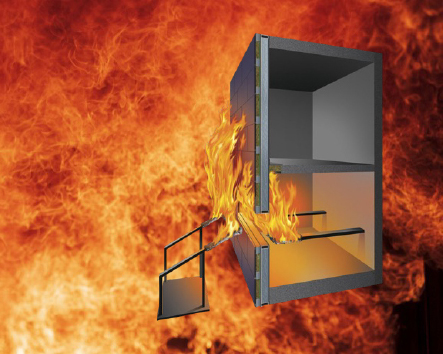
Exterior wall systems in multistory construction must meet multiple fire testing standards to ensure occupant safety and code compliance. NFPA 285 evaluates flame spread in wall assemblies containing combustible components, while ASTM E84 measures surface burning characteristics (flame spread and smoke development) and ASTM E119 tests the fire resistance of complete assemblies under load. PowerWool® products, including CavityBoard® and RigiBoard®, are mineral‑based and fully non‑combustible. This means they inherently satisfy ASTM E84 with a flame spread index of zero and smoke developed index near zero, and they contribute to assemblies that achieve ASTM E119 fire ratings. Most importantly, because PowerWool® is non‑combustible, exterior walls incorporating it do not trigger additional NFPA 285 testing requirements—streamlining compliance for architects and builders.

How It Works

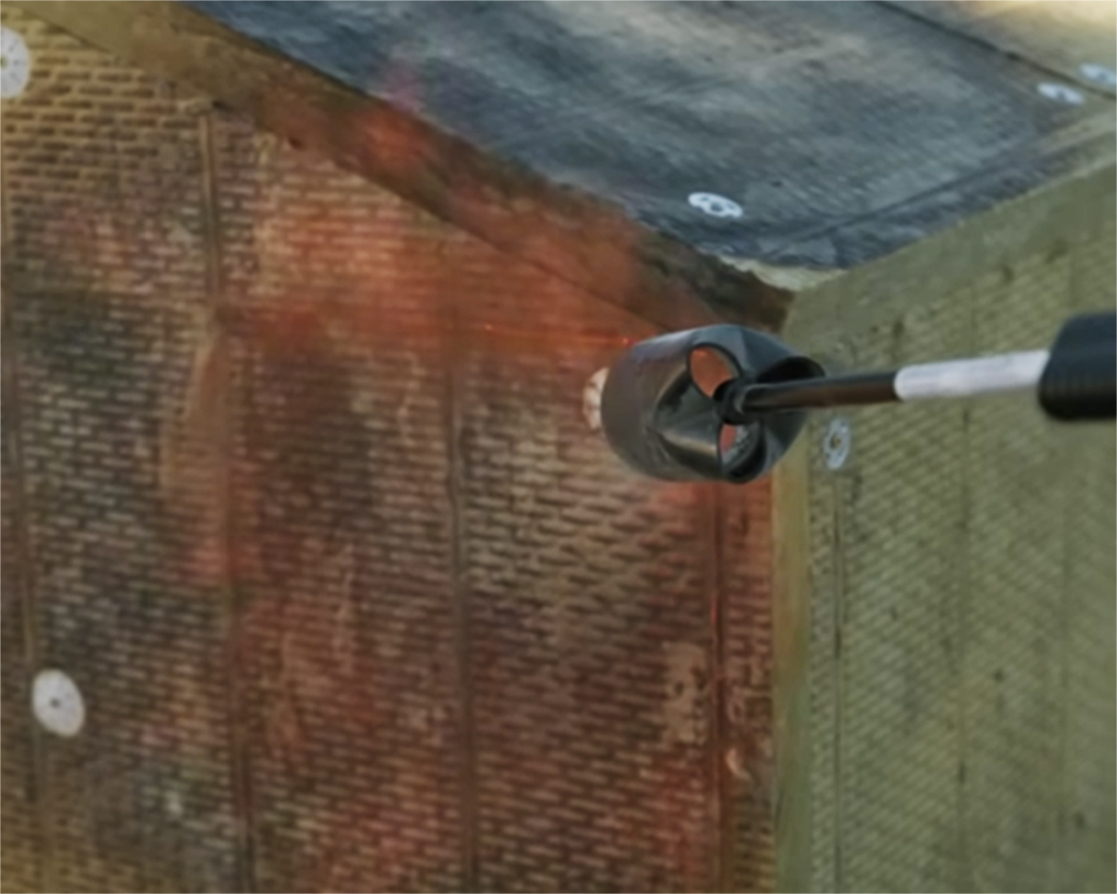
When specified in Z‑girt, clip‑and‑rail, or over‑sheathing systems, PowerWool® integrates seamlessly with air and weather barriers to form assemblies that are inherently fire‑safe. Its mineral composition resists ignition and flame propagation, ensuring that the insulation layer does not contribute to fire load. In ASTM E84 testing, PowerWool® demonstrates ASTM E84 Class A performance with negligible flame spread and smoke development. In ASTM E119 assemblies, it supports fire‑resistant wall designs by maintaining integrity under prolonged exposure. Within NFPA 285, its non‑combustibility means the insulation does not require project‑specific testing, allowing designers to focus on other façade components while maintaining compliance with IBC requirements.

Benefits

PowerWool® delivers a trifecta of fire safety performance: Class A results under ASTM E84, contribution to ASTM E119 fire‑rated assemblies, and inherent compliance with NFPA 285 as part of non‑combustible exterior walls. This reduces design risk, accelerates approvals, and eliminates the cost and complexity of additional fire testing. Beyond fire performance, PowerWool® maintains stable R‑values, dimensional reliability, and acoustic dampening, while supporting sustainability goals through recyclability. For architects, it provides confidence in meeting multiple fire standards simultaneously; for builders, it ensures ease of installation and fewer callbacks. The result is an exterior wall system that is safer, code‑compliant, and built to endure without compromise.