Roof

Why Over Roof Systems

Modern roof assemblies must balance thermal performance, moisture management, and fire safety while accommodating architectural features such as outriggers and overhangs. Traditional roof insulation often struggles to maintain continuity when structural elements are added above the thermal layer. PowerWool RigiBoard® is engineered to solve this challenge: its rigid composition provides a stable, non‑combustible insulation platform that supports continuous performance across complex roof geometries. By placing insulation above the deck, architects and builders create a resilient thermal envelope that enhances energy efficiency and long‑term durability.

How It Works

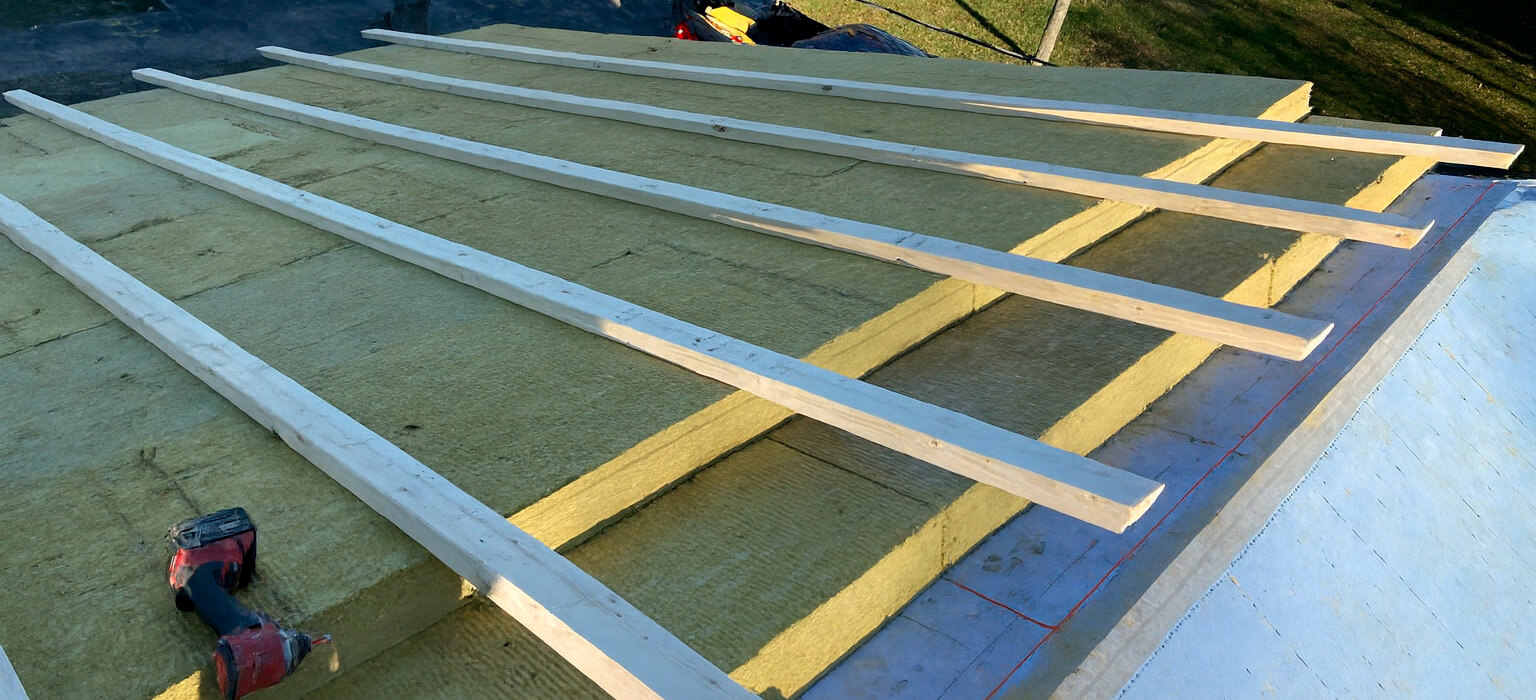
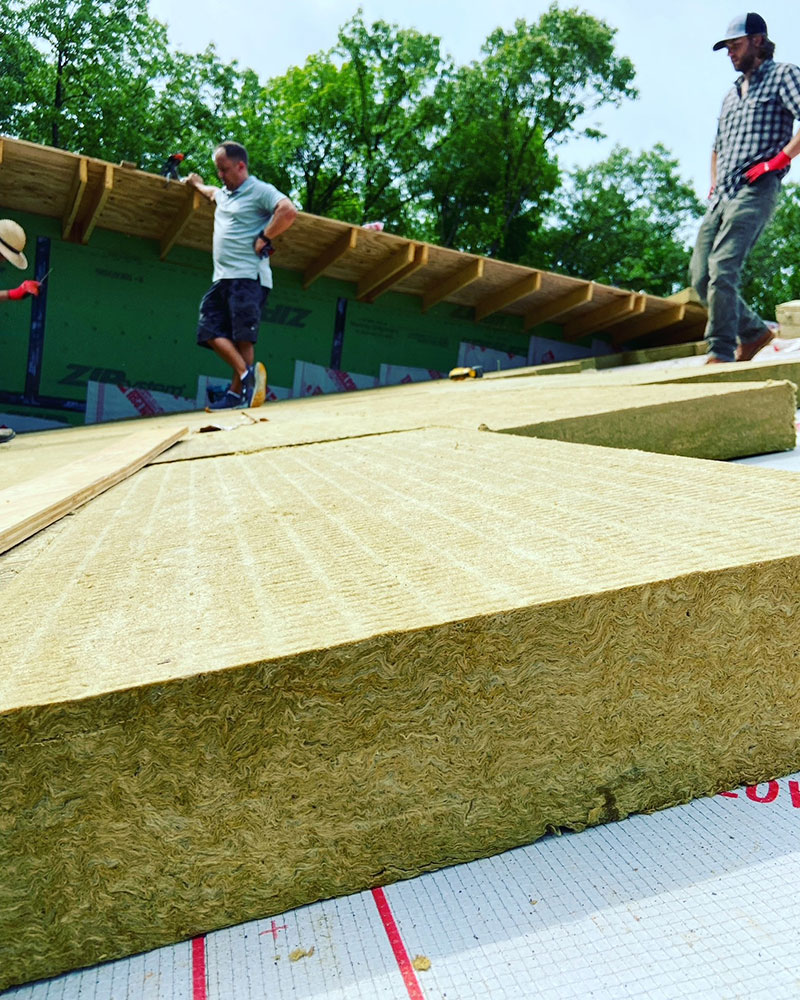
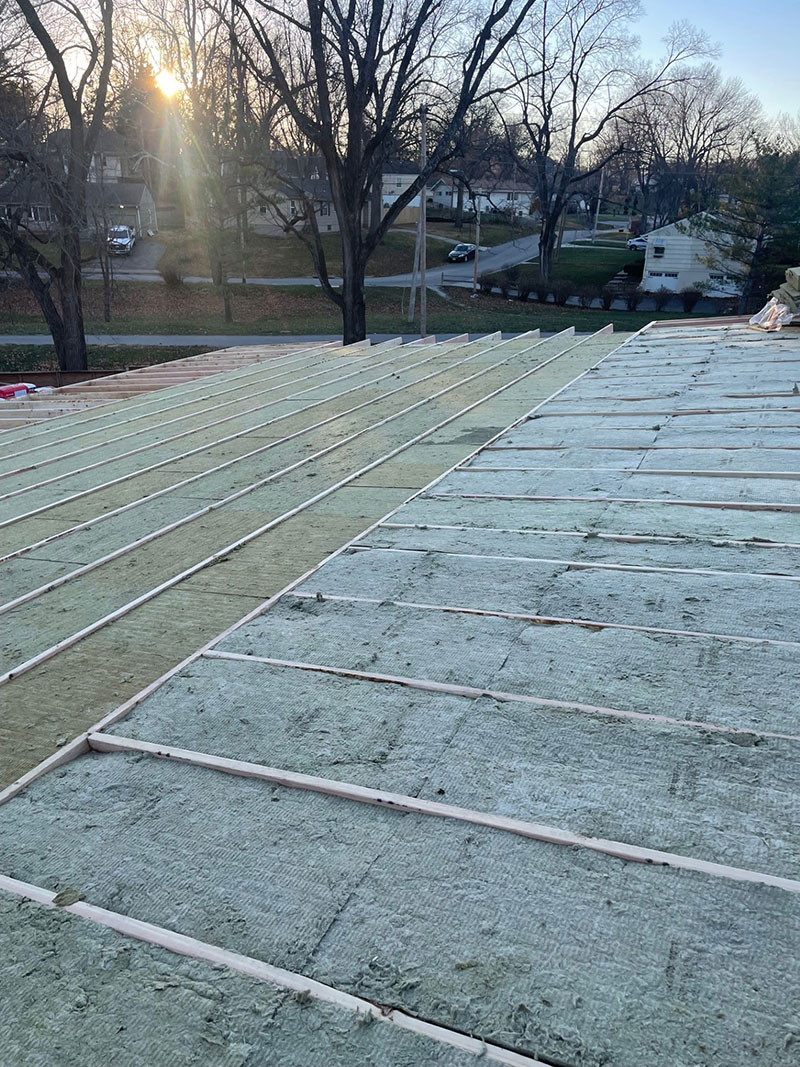
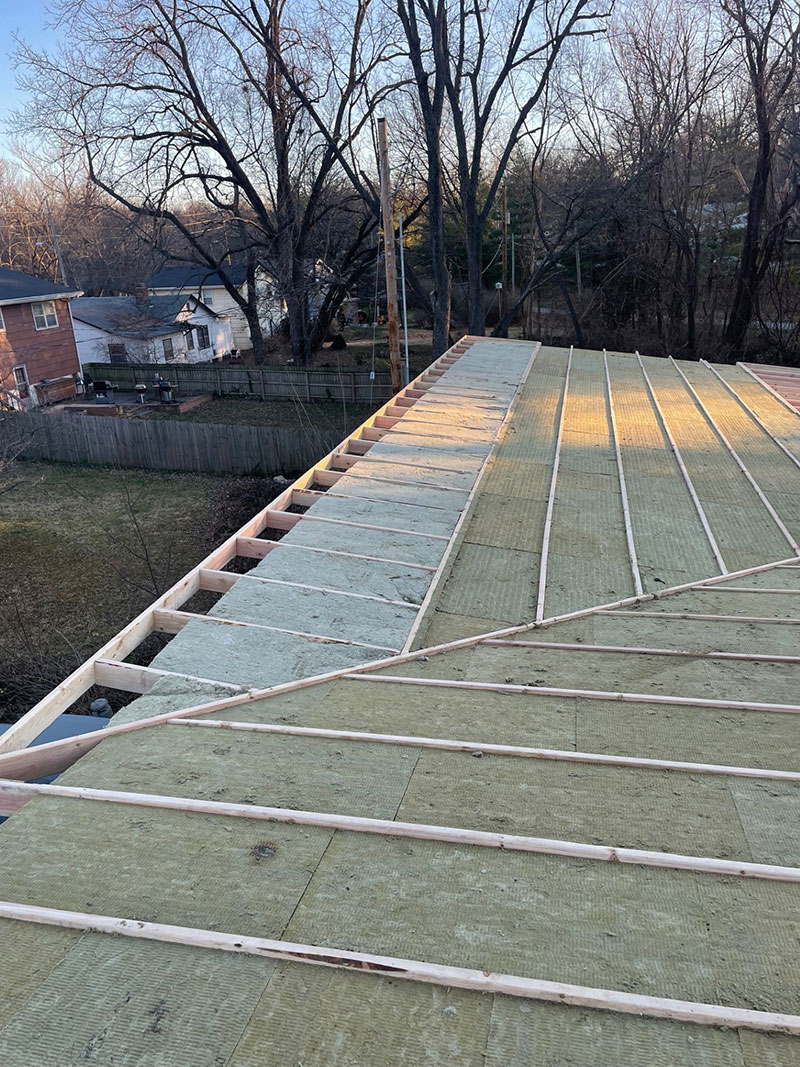
In an over‑roof system, PowerWool RigiBoard® is installed directly above the roof deck, forming a continuous layer of exterior insulation. Outriggers, overhangs, or other structural extensions are added after the insulation, ensuring the thermal barrier remains uninterrupted. The boards are mechanically fastened or adhered, integrating seamlessly with air and weatherproofing membranes. Their rigid format simplifies detailing around penetrations and transitions, while the vapor‑open structure allows assemblies to dry naturally. This sequencing ensures that architectural features can be incorporated without compromising the integrity of the thermal envelope.

Benefits

PowerWool RigiBoard® delivers stable R‑values, dimensional stability, and non‑combustible performance that elevate roof assemblies. Its composition contributes to fire resistance and acoustic dampening, while its vapor‑permeable design supports long‑term durability by reducing the risk of trapped moisture.  Environmentally responsible, RigiBoard® helps projects meet sustainability goals while ensuring safety and performance. For architects, it provides confidence in design flexibility; for builders, it offers ease of installation and fewer callbacks. The result is a roof system that is efficient, resilient, and adaptable to modern architectural expression.